Flea and tick populations thrive in Hillsborough County because warm, humid air keeps soil temperatures elevated nine months out of the year, preventing the natural winter die-offs observed in northern regions. In…
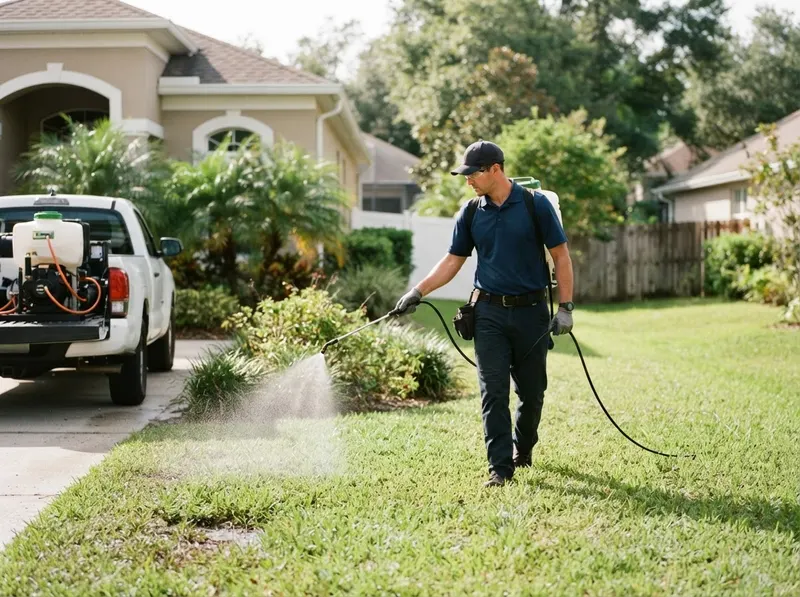
Flea and tick populations thrive in Hillsborough County because warm, humid air keeps soil temperatures elevated nine months out of the year, preventing the natural winter die-offs observed in northern regions. In shady, moisture-retaining landscapes across Seminole Heights, Palma Ceia, and Davis Islands, heavy oak canopies and thick St. Augustine turf provide sheltered nesting conditions for female fleas, which deposit up to 50 eggs per day into the soil. Standard veterinary topicals protect domestic pets from direct bites, but they do not eliminate outdoor reservoirs where immature larvae shelter within damp soil and leaf litter. A professional yard defense targets moisture-dense zones around patio perimeters, garden edges, and fence lines to stop larvae from pupating into adult biting populations.
Selecting professional outdoor treatments over repeated over-the-counter DIY granules is essential for lasting suppression. Retail broadcast sprays provide quick surface contact kills but degrade rapidly under Tampa's frequent afternoon downpours and intense UV index, leaving pupae shielded beneath organic matter. Professional outdoor management integrates micro-encapsulated adulticides paired with an insect growth regulator (IGR) that binds to soil particles, preventing juvenile instars from maturing even after heavy rainfall. The functional trade-off is scheduling: topical yard applications require family members and pets to stay off treated turf for two to three hours until liquid treatments dry completely, whereas granular applications require light irrigation to settle the active ingredients down past the grass blades into the thatch layer.
Properties bordering natural brush and water features in New Tampa, Westchase, and Ballast Point experience continuous pest pressure carried by urban wildlife such as raccoons, opossums, and stray feral cats. To maintain a functional protective barrier without locking property owners into restrictive annual contracts, treatment protocols are organized around seasonal surges: 1. A physical yard audit maps shade canopies, irrigation heads, and canine run areas; 2. An EPA-registered liquid or granular formulation is placed directly into harboring zones; 3. Foundation siding is treated up to a 3-foot height to prevent ticks from migrating up stucco or wood siding. Technicians are state-certified, using targeted perimeter defense strategies that preserve beneficial soil organisms while breaking the reproductive cycle of biting parasites.
Every job gets a firm, written price after a free on-site visit.
Tell us about your flea and tick lawn treatment job in Tampa and we'll send a clear, written quote, usually the same day.
 Gulf Finch Pest Control